
Automating Social Media: Your 2026 Strategy Guide
Plan, create and schedule social content with Pazi. A practical guide to connected channels, on-brand posts and publishing approvals—with you in control.

Plan, create and schedule social content with Pazi. A practical guide to connected channels, on-brand posts and publishing approvals—with you in control.

A one-person unicorn is a billion-dollar company built and run by one founder with AI agents doing the work of whole departments.
An autonomous AI company is a real business that AI agents build and run day to day, while the founder sets direction and stays the decision-maker. A 2026 definition.
Sales reps don't have a talent problem; they have a time distribution problem. Sales reps spend only 28% of their time actually selling, according to Salesforce's AI Sales Agent Guide, with the rest going to Customer Relationship Management (CRM) data entry, lead research, follow-up sequencing,
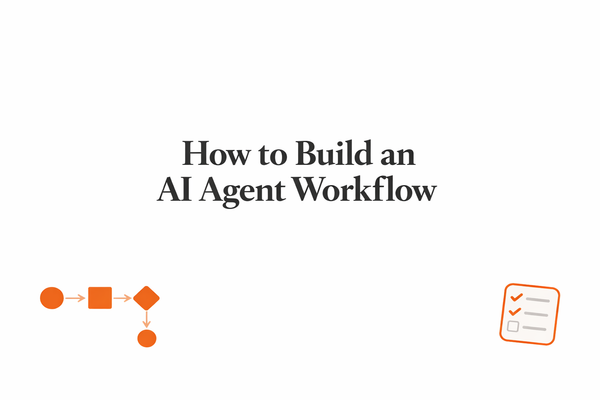
TL;DR * AI agent workflows handle multi-step ops end-to-end; traditional automation stops at one rule * Building one takes four decisions: trigger, tool chain, judgment rules, and oversight loop * Teams scaling ops use platforms like Pazi to run these workflows inside Slack Table of Contents * What an AI

Real estate teams have added more tools in the past three years than in the previous decade. The coordination load didn't go with them, because tools generate output and stop; AI agents monitor workflows, act when conditions are met, check the result, and keep going until the work
TL;DR * Marketing's real bottleneck is logistics, moving workflows forward without a human at every step. * AI agents now own content production, email nurturing, social scheduling, and analytics reporting end-to-end. * Teams scaling ops are moving to agent platforms like Pazi - built for judgment plus execution. Table
74% of consumers now expect 24/7 customer service availability, a standard AI created that most support teams are still building toward. The teams that have closed the gap changed how their tickets move. Their agents own the full resolution loop, checking order history, applying business rules, escalating on defined
Key Takeaways * If your operations team needs agents running shared workflows across Slack, Teams, and 22+ channels end-to-end, Pazi is built for that. Lindy is not. * Lindy is a personal AI work assistant for one user's inbox, calendar, meetings, and follow-ups. Over 400,000 professionals
Most teams evaluating AI agents in 2026 are not short on options but short on a framework that matches platforms to actual work shapes. The AI agent market has fractured fast, and what's being called "AI agents" now spans five distinct categories, and treating them as
Most small business owners spend several hours a week on tasks that run fine without their judgment. Invoice follow-up, appointment booking, and answering the same customer questions every week are execution tasks that AI agents for small business now handle automatically. The setup requires no developer, no IT budget,
Finance teams that have deployed robotic process automation (RPA) know what comes after the rollout. The tool handles routine volume cleanly, then creates a parallel manual process for everything it can't resolve. That second queue is usually where the costly exceptions accumulate. AI agents handle that queue differently,
Comparisons
Key Takeaways * One AI agent for a whole team works the same way as one printer for a whole office, fine until two people need it at the same time, which happens on day one * Pazi is the only tool that makes team-wide AI genuinely parallel. Each function gets
AI agents
Most teams I talk to describe their AI setup as "running multiple agents" when they're actually running one agent with a long list of tools. The distinction sounds semantic until the operation gets complex enough that the single context window starts dropping things: wrong context, missed
use-cases
If your operations team still manually triages every alert, routes every approval, and assembles every status report, that's not a staffing problem. It's a missing-automation problem. 75% of global knowledge workers now use AI at work, and 90% say it helps them save time (Microsoft
Education
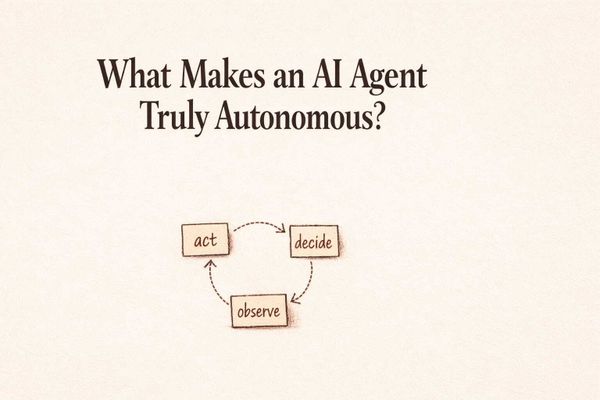
An agent that responds and stops isn't autonomous. The mechanism that makes the difference is the agentic loop, where the system acts, checks the result, decides what to do next, and acts again until the work is done. That behavior is what separates genuine autonomy from sophisticated automation.
use-cases
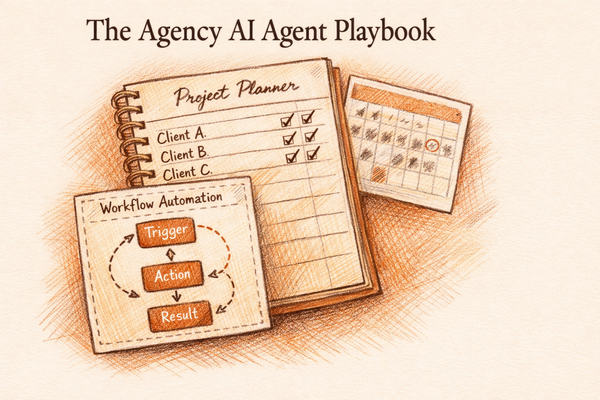
Agency account managers spend 15 to 20 hours per client per month on administrative work that has nothing to do with the actual deliverables: pulling analytics, writing status updates, chasing unpaid invoices, sending meeting notes, and running onboarding sequences. In a 10-client shop, that overhead compounds into most of
Education
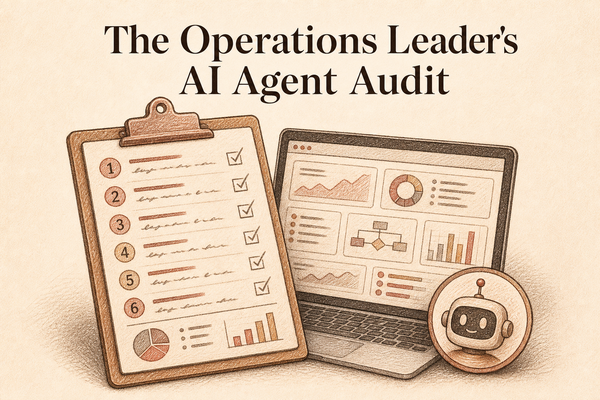
Operations teams have 12 core workflows where AI agents replace manual coordination, triage, and reporting, from incident response to compliance prep. If you haven't automated at least half of these, you're spending engineering time on work that should run itself. TL;DR - AI agents handle incident
Education
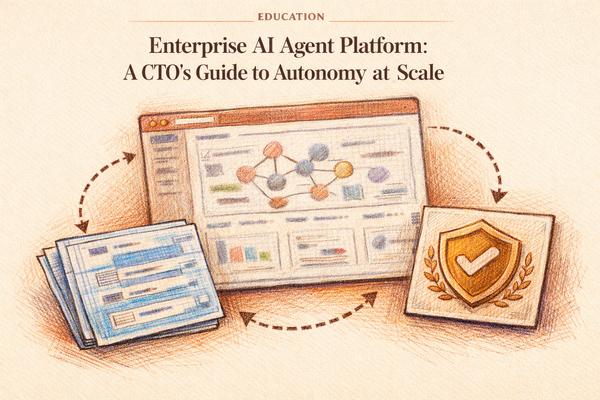
Enterprise AI Agent Platform: A CTO's Guide to Autonomy at Scale Most CTOs evaluating an enterprise AI agent platform are being pitched two categories of product that don't deliver what the category name implies. The first is a raw LLM API with a tool-calling layer:
Education
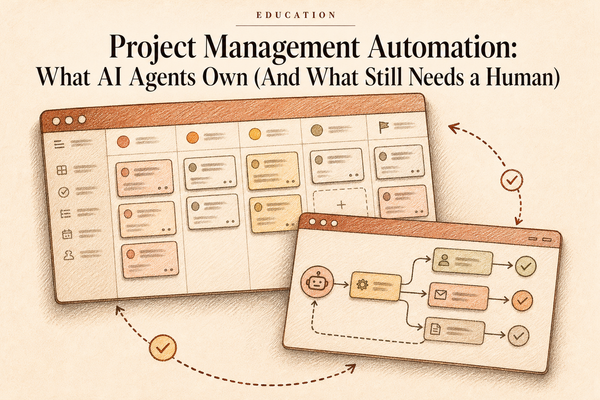
Project management automation is the practice of offloading repeatable coordination work (status aggregation, blocker detection, and reporting) to software systems so that the project manager can focus on the decisions that require human judgment. Rule-based automation handled the easy end of this for a decade; the status meetings didn&
Education
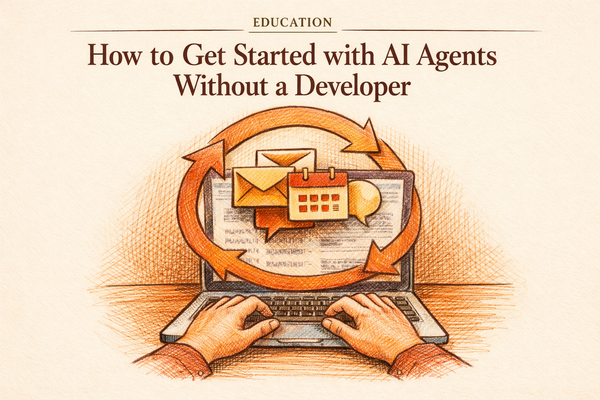
Most people describing an AI agent are describing a chatbot. The two are different in a way that matters: a chatbot responds when you ask it something. An agent runs on your behalf, calls tools, completes work, and stops when the job is done. You don't need to
Education
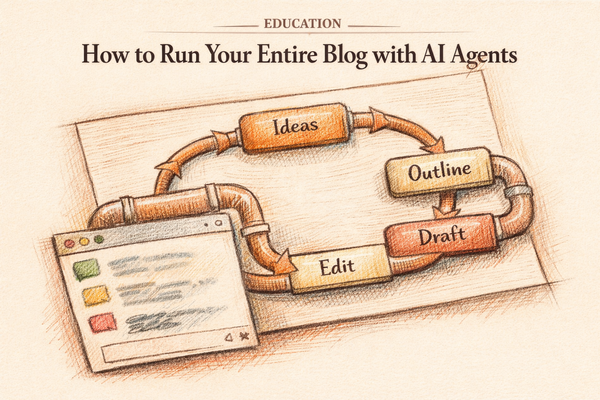
Running a blog with AI agents at publishing velocity is an architectural problem, not a writing problem. The gap between what most content teams produce and what's possible isn't talent or budget; it's the coordination layer between every stage of production. Most companies publishing
Education
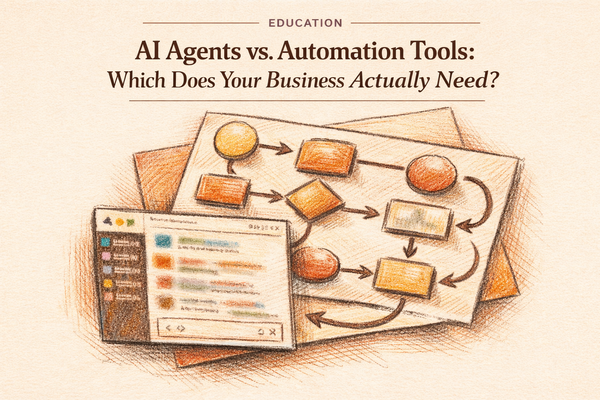
Automation tools and agentic tools are not competing answers to the same problem. They handle categorically different types of work, which means the question is not which one to pick: it is understanding where each one stops and what happens to the work that falls outside its range. Most businesses
Education
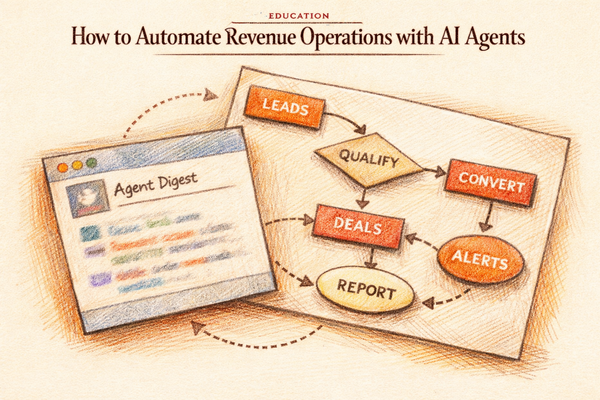
Revenue operations automation, applied to the wrong layer first, doesn't give RevOps teams their time back. It gives them wrong data, faster. The weekly forecast that still needs manual adjustment before it goes to leadership, the pipeline report that still takes half a day to prepare, the CRM