Education
What Is an Autonomous AI Company? A 2026 Definition
An autonomous AI company is a real business that AI agents build and run day to day, while the founder sets direction and stays the decision-maker. A 2026 definition.

Learn about AI agents, automation, and team building
Education
An autonomous AI company is a real business that AI agents build and run day to day, while the founder sets direction and stays the decision-maker. A 2026 definition.
Education
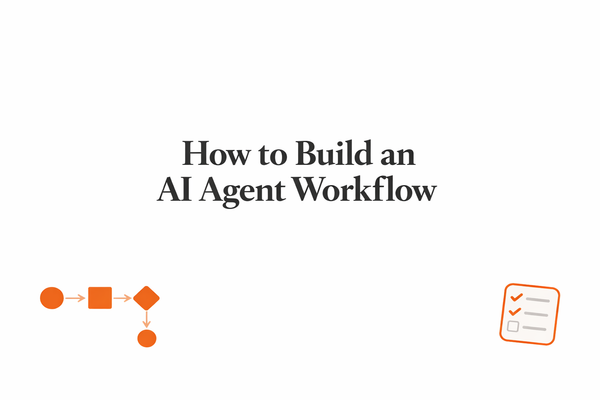
TL;DR * AI agent workflows handle multi-step ops end-to-end; traditional automation stops at one rule * Building one takes four decisions: trigger, tool chain, judgment rules, and oversight loop * Teams scaling ops use platforms like Pazi to run these workflows inside Slack Table of Contents * What an AI
Education
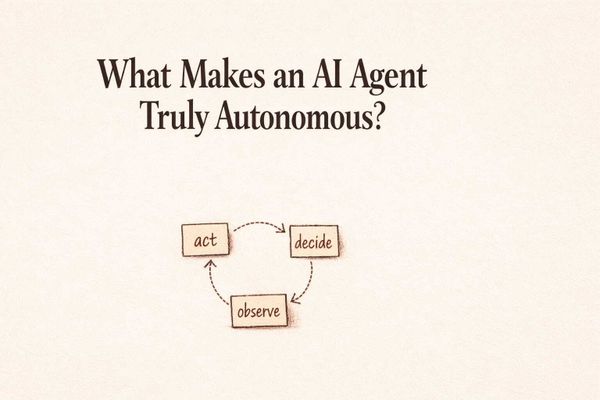
An agent that responds and stops isn't autonomous. The mechanism that makes the difference is the agentic loop, where the system acts, checks the result, decides what to do next, and acts again until the work is done. That behavior is what separates genuine autonomy from sophisticated automation.
Education
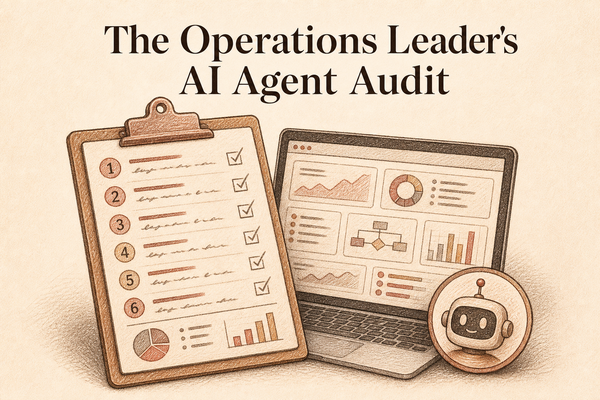
Operations teams have 12 core workflows where AI agents replace manual coordination, triage, and reporting, from incident response to compliance prep. If you haven't automated at least half of these, you're spending engineering time on work that should run itself. TL;DR - AI agents handle incident
Education
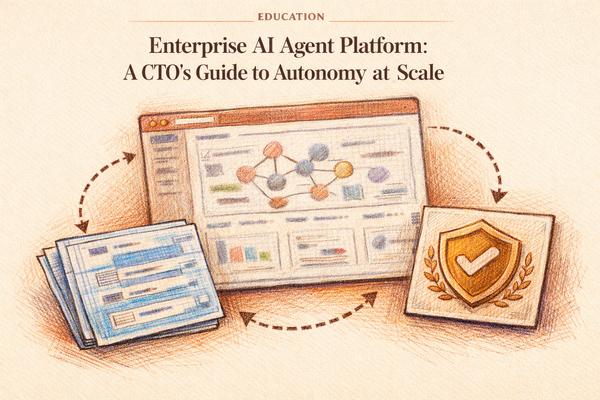
Enterprise AI Agent Platform: A CTO's Guide to Autonomy at Scale Most CTOs evaluating an enterprise AI agent platform are being pitched two categories of product that don't deliver what the category name implies. The first is a raw LLM API with a tool-calling layer:
Education
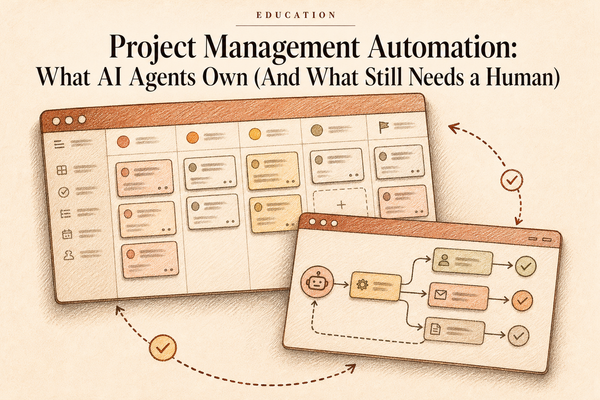
Project management automation is the practice of offloading repeatable coordination work (status aggregation, blocker detection, and reporting) to software systems so that the project manager can focus on the decisions that require human judgment. Rule-based automation handled the easy end of this for a decade; the status meetings didn&
Education
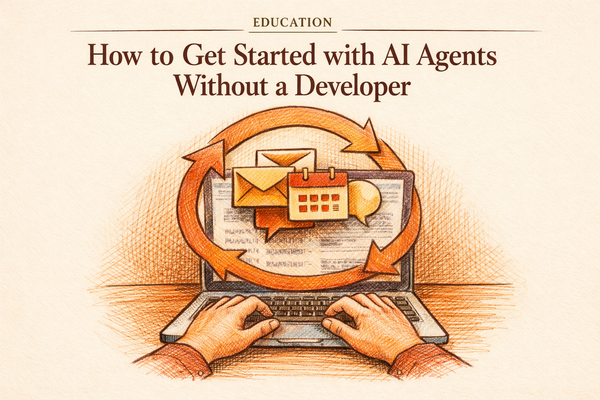
Most people describing an AI agent are describing a chatbot. The two are different in a way that matters: a chatbot responds when you ask it something. An agent runs on your behalf, calls tools, completes work, and stops when the job is done. You don't need to
Education
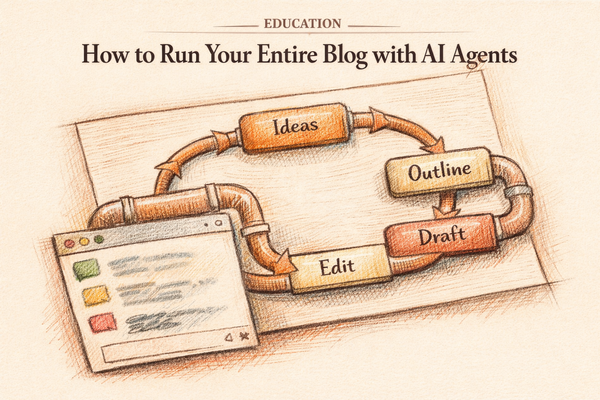
Running a blog with AI agents at publishing velocity is an architectural problem, not a writing problem. The gap between what most content teams produce and what's possible isn't talent or budget; it's the coordination layer between every stage of production. Most companies publishing
Education
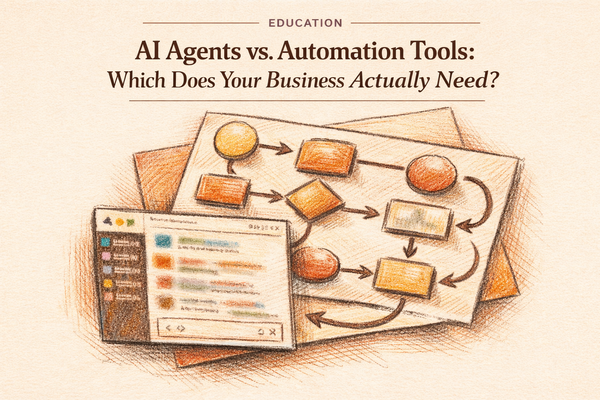
Automation tools and agentic tools are not competing answers to the same problem. They handle categorically different types of work, which means the question is not which one to pick: it is understanding where each one stops and what happens to the work that falls outside its range. Most businesses
Education
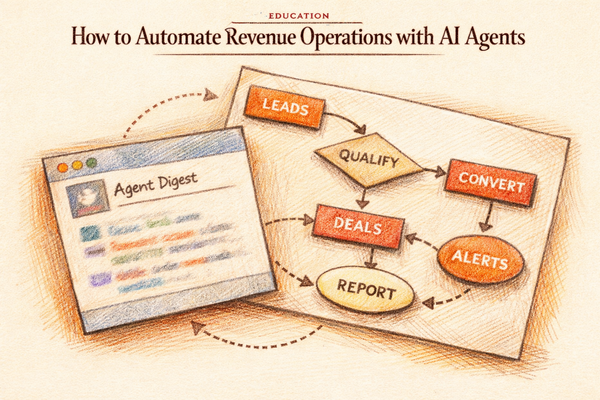
Revenue operations automation, applied to the wrong layer first, doesn't give RevOps teams their time back. It gives them wrong data, faster. The weekly forecast that still needs manual adjustment before it goes to leadership, the pipeline report that still takes half a day to prepare, the CRM
Education
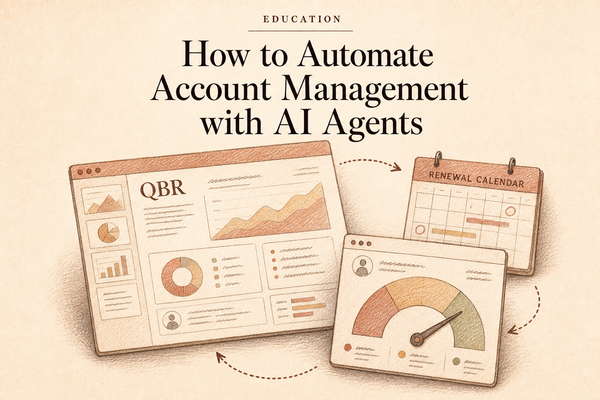
Account management automation is the practice of delegating the repeatable coordination, monitoring, and documentation tasks in an account manager's role to an AI agent, so the AM can focus on the relationship work only a human can do. Most B2B SaaS account managers spend more hours pulling renewal
Education
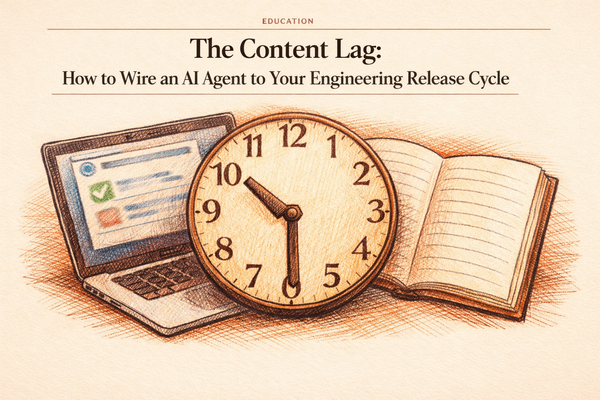
The content lag is the gap between when engineering ships a feature and when marketing publishes about it. In fast-moving teams that deploy every day, that gap runs weeks. The information needed to write an accurate brief exists right at the moment of ship: in the pull request, the